Thursday, April 30, 2009

Fundamentalism: Good or Bad?


Are you a fundamentalist? What exactly does the term mean?

To listen to an apologetics.com radio show on J. Gresham Machen's book, "Chrisitanity and Liberalism," Click the link below. It can also be downloaded on itunes as a podcast.

Christianity and Liberalism

God Bless,

Doug

Labels: , ,

Wednesday, January 23, 2008

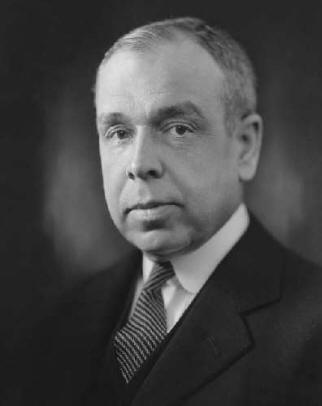
The Good Fight of Faith - J. Gresham Machen

Below is a quote by J. Gresham Machen from the 1930’s laying out the battles taking place in the church. In the quote Machen rightly ascribes these battles to the modernists of his day. What is amazing about this quote is that it perfectly captures the arguments of the post-moderns in the church today.

"You will have battles when you go forth as minister into the church. The church is now in a period of deadly conflict. The redemptive religion known as Christianity is contending, in our own church and in the all the larger churches of the world, against a totally alien type of religion. As always, the enemy conceals his most dangerous assaults under pious phrases and half-truths. The shibboleths of the adversary have sometimes a very deceptive sound. ‘Let us propagate Christianity,’ the adversary says, ‘but let us not always be engaged in arguing in defense of it; let us make our preaching positive, and not negative; let us avoid controversy; let us hold to a Person and not to a dogma; let us sink small doctrinal differences and seek the unity of the church of Christ; let us drop doctrinal accretions and interpret Christ for ourselves; let us look for our knowledge of Christ, not to ancient books, but to the living Christ in our hearts; let us not impose Western creeds on the Eastern mind; let us be tolerant [think all views are equally correct] of opposing views.’ Such are some of the shibboleths of that agnostic Modernism which is the deadliest enemy of the Christian religion today. They deceive some of God’s people some of the time; they are heard sometimes from the lips of good Christian people, who have not the slightest inkling of what they mean. But their true meaning, to thinking men, is becoming increasingly clear. Increasingly it is becoming necessary for a man to decide whether he is going to stand or not to stand for the Lord Jesus Christ as he is presented to us in the word of God."

J. Gresham Machen – The Good Fight of Faith (sermon)

Labels: , , , , , , , ,

Wednesday, January 02, 2008

The Letter Kills, But the Spirit Gives Life

The letter killeth, but the Spirit giveth life. (2 Cor. 3:6)

The law of God is holy and just and good; it is inexorable, and we have fallen under its just condemnation. That is at the bottom what Paul means by the "the letter killeth.’ He does not mean that attention to pedantic details shrivels and deadens the soul. No doubt that is true, within certain spheres; it is a useful thought. But it is trivial indeed compared with what Paul means. Something far more majestic, far more terrible, is meant by the Pauline phrase. The letter that Paul means is the dreadful handwriting of ordinances that was against us, and the death with which it kills is the eternal death of those who are forever separated from God.

But that is not all of the text. The letter killeth, Paul says, but the Spirit maketh alive. There is no doubt about what he means by ‘the Spirit.’ He does not mean that spirit of the law as contrasted with the letter; he certainly does not mean the lax interpretation of God’s commands which is dictated by human lust or pride; he certainly does not mean the spirit of man. No real student of Paul has doubted, so far as I know, but that he means the Spirit of God. God’s law brings eternal death because of sin; but God’s Spirit, shed abroad in the heart, brings life. The thing that is written killeth, but the Holy Spirit in the heart gives life.

The contrast runs all through the New Testament. Hopelessness under the law is described in the seventh chapter of Romans. "Oh wretched man that I am! Who shall deliver me from the body of this death?" But this hopelessness is transcended by the gospel. "I thank God through Jesus Christ our Lord… For the law of the Spirit of life in Jesus Christ hath made me free from the law of sin and death.’ The law’s sentence of condemnation was borne for us by Christ who suffered in our stead; The handwriting of ordinances which was against us—the dreadful ‘letter’ of which Paul speaks in our text—was nailed to the cross.

-J. Gresham Machen-

Labels: , , , ,

Friday, November 30, 2007

Contact With the Infinite

It cannot be denied. Man is a poor finite creature: he is a denizen of the earth. From one point of view, he is very much like the beasts that perish. Like them, he lives in a world of phenomena; he is subject to a succession of experiences, and he does not understand any one of them. Science can observe; it cannot explain. When it tries to explain, it becomes laughable. Man is certainly finite. But that is not the whole truth. He is not only finite, for he knows that he is finite, and that knowledge brings him into connection with infinity. He lives in a finite world. But he knows at least that it is not the totality of things. He lives in a procession of phenomena. But to save his life he cannot help searching for a first cause. In the midst of his trivial life, there rises in his mind one strange and overpowering thought – the thought of God. It may come by reflection, by subtle argument- from the effect to cause, from design to the designer. Or it may come by ‘a sunset touch.’ Back of the red, mysterious, terrible, silent depths beyond the silent meeting-place of sea and sky, there is an inscrutable power. In the presence of it we are helpless as a stick or stone. As helpless, but more unhappy – unhappy because of fear. With what assurance can we meet the infinite power? Its works in nature are horrible in the infliction of suffering. And what if physical suffering should not be all, what of the sense of guilt? What if the condemnation of conscience should be but the foretaste of judgment? What if contact with the infinite should be contact with a dreadful infinity of holiness? What if the inscrutable cause of all things should turn out to be, after all, a righteous God?...

…This great beyond of Mystery - can Jesus help us there?…

…The church hurled anathemas at those who held that Christ, though great, was less than God. And rightly! That difference was no trifle. There is no such thing as ‘almost God.’ The thought is blasphemy. The next thing less than the infinite is infinitely less. If Christ be the greatest of finite creatures, then still our souls are restless, still we are seekers after God. But now is Christ, our Savior, our Champion, the same who says, ‘Thy sins are forgiven thee,’ revealed as very God. And we believe! It is the supreme venture of faith; faith can go no higher.

Such a faith is a constant mystery to us who possess it; it is ridiculed by those who have it not. But, if possessed, it overcomes the world. In Christ, all things are ours. There is now no awful beyond of mystery and fear. We cannot explain the world. But we rejoice now that we cannot explain it. To us it is all unknown. But it contains no mysteries for our Savior. He is on the throne. He is at the centre. He is ground and explanation of all things. He pervades the remotest bounds. In Him all things consist. The world is full of dread, mysterious powers. They touch us already in a thousand woes. But from all of them we are safe. ‘Who shall separate us from the love of Christ? Shall tribulation, peril, or sword? As it is written, For thy sake we are killed all the day long; we are accounted as sheep for the slaughter. Nay, in all these things we are more than conquerors through him that loved us. For I am persuaded, that neither death, nor life, nor angels, nor principalities, nor powers, nor things present, nor things to come, nor height, nor depth, nor any other creature, shall be able to separate us from the love of God, which is in Christ Jesus our Lord.

J. Gresham Machen - God Transcendent

Labels: , , , , ,

Saturday, November 24, 2007

Brothers and Sisters in Christ and the Non-Christian

"The great trouble is not that we love those who are not Christians too much, rather that we do not love them enough. If we really loved them, we should not be content with the relationship to them involved in the comparatively cold brotherhood of man, but we should long passionately, and by the preaching of the gospel we should make constant and earnest endeavour, to bring them in with us into the full intimacy of the household of God.

-J. Gresham Machen-

Labels: , , ,

Tuesday, October 23, 2007

The Poor You Will Always Have

For ye have the poor with you always, and whensoever ye will ye may do them good; but me ye have not always. Mark 14:7

Here in one of the most unforgettable, characteristic words that Jesus ever uttered, our Lord actually contrasts the service of the poor with the service of Him. "Ye have the poor with you always,’ he said, ‘and whensoever ye will ye may do them good; but me ye have not always.’ We have not Jesus always with us in the sense in which the woman had Him with her at Bethany; we cannot pour any precious ointment upon His head. But in a higher better sense we have Him with us still. And surely we must not neglect the privilege of communion with Him.

Certainly I am not advocating neglect of external service. Without that it is quite impossible that we should be true disciples of Jesus. It is a poor and untrue religion which leaves the hungry in distress. But we shall perform such services all the better if we take time also to commune with Jesus Himself. Do you think that the Christian life is concerned only with philanthropy; do you think that activity in social service is all that our Lord Desires? Oh no, my friends. Those things are absolutely necessary to the Christian, but they are not all that is necessary. If we are true Christians, we shall not neglect those things; but we shall also take time to go into our closet and close the door; and there, with the world shut out, with even our service forgotten for the moment, we shall think no longer of what we do but of what our Savior has done, and we shall pour out upon Him, with an abandon like that of the woman at Bethany, our gratitude and love and praise.

…In these words to the woman at Bethany our Lord sets us free from the oppressive tyranny of the efficiency expert…

J. Gresham Machen – The Claims of Love

Labels: , ,